When should you not go too far?
There is a huge variety of articles, books, tutorials that talk about the art of interior design. All of them carry some specific information that should help beginners or amateurs figure out how to create a stylish and interesting interior space. But each of them will tell you that the main thing in the interior is not a sense of style, color or shape, but a sense of proportion. Only it will help you not to cross the line that separates an interesting, progressive style from an incomprehensible mishmash and outright excesses.
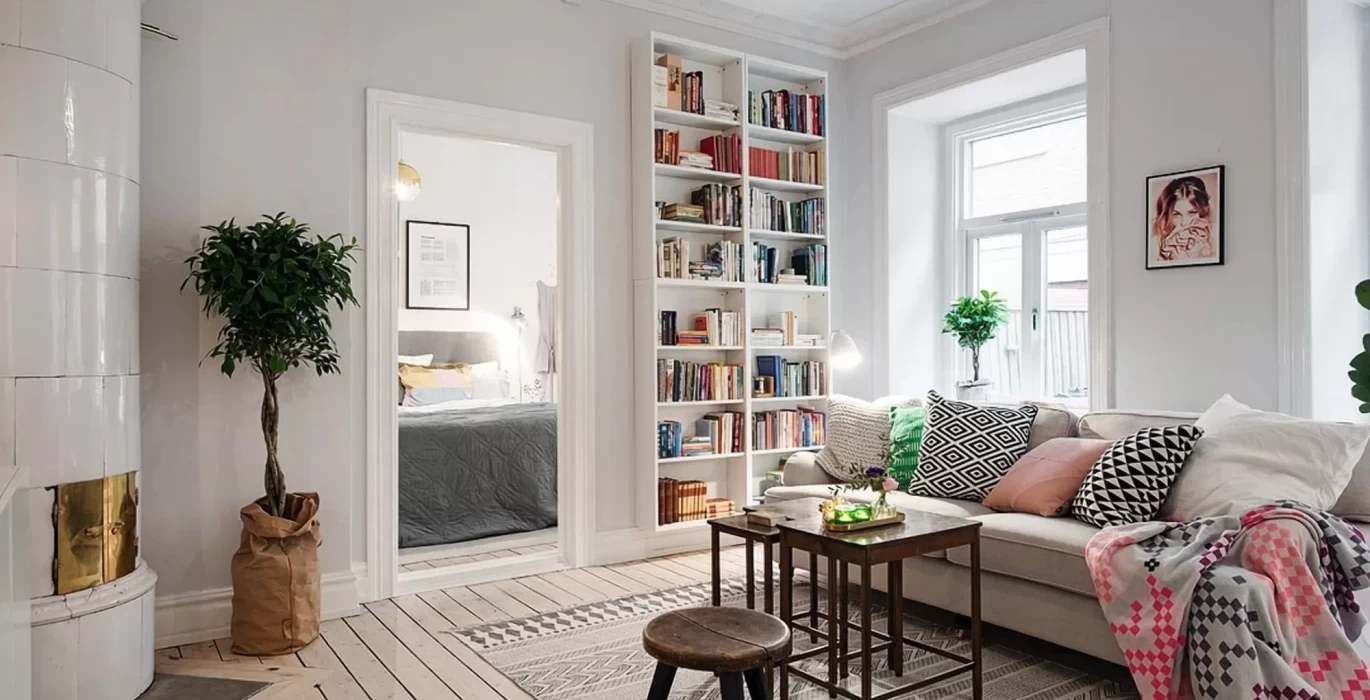
There are several areas of the interior in which you can overdo it.
Color
The color inflections are fairly obvious. The abundance of bright colors in the interior will frankly harm - up to real headaches. Too many dark colors will make the room look like a crypt. And the entire interior is exclusively in white, not only will it emphasize any speck of dust and hair, it will also create a very cold atmosphere, which is definitely not suitable for a living space. Therefore, it is important to understand that a completely dark bedroom is stupid. It is better to combine a light base (floor, ceiling, walls) with dark furniture and accessories. To prevent bright colors from looking tasteless, firstly, combine them correctly, and secondly, some neutral shade should be the dominant color.
Style
Inflections in style are not always obvious. But it's better to keep them in mind. They are most obvious in historical interiors, embodied in modern homes. No matter how objectively beautiful Gothic is, in its pure form it is completely inappropriate in modern homes - bulky, outdated, not flexible. Therefore, Gothic needs to be “diluted” with minimalism, constructivism, etc. Or, for example, a Victorian-style kitchen will be trite not functional, so you should use only elements. In fact, you need to understand when the style of the interior can be fully implemented, and when it is worth using it only fragmentarily.
Decor
Decor can be both a lot and a little. And all this is an inflection point. Without decor, the room looks empty and uninhabited, not as a place for living and leisure, but simply as a haven. Even in such laconic styles as minimalism or Japanese style, decor is still present, albeit in small quantities. An excessive abundance of decor is also not good - they spoil the style of the interior, an eyesore, collect dust and just get in the way. Even the kitsch style, which is frankly anti-art, has some limits that should not be crossed. Of course, the amount of decor varies depending on the style of the interior. But even in the "home" interior of the Provence-style living room, you should not overdo it with the decor.
Furniture
There should be exactly as much furniture as is adequately located in the room. Obviously, a large room will fit more furniture, and a small one will fit less. Therefore, if you have a small bathroom, then you should not try to fit a bathtub, a sink, a shower, a washing machine, a hygiene case, etc. into it. Get by with a shower, sink, mirror and hanging shelves. But also, don't over-limit yourself. Of course, a spacious room is good, but not when it looks empty and uninhabited. In this case, it is better to add a few not very necessary things - an armchair, a tea table, a pencil case for small things, etc. Or just use large models of furniture.
You can purchase any furniture in the exclusive furniture store company «Smart Space». In addition, you can use the services of designers who are familiar with the nuances of their work firsthand.
 03/10/2022
What needs to be done after the repair?
 04/10/2022
Storage systems in a small apartment
 08/02/2024
How to arrange sockets in an apartment